Reading a tide curve without a plotter
Six-hour interpolation is the most common silent error in small-craft planning.
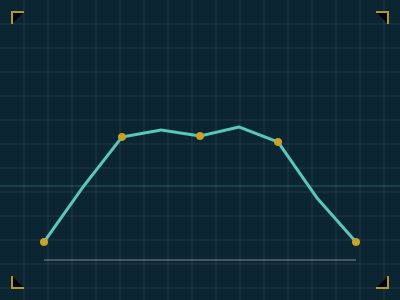
The straight-line mistake
Dividing the range by six hours treats the tide as a ramp. Real water follows something closer to a cosine, so the straight line under-reads depth near the ends and over-reads it near mid-tide. On a 5 m range the mid-tide error can reach a metre, which is more than most kayak drafts.
Cosine in one line
Between two extremes, height equals the mean of the two heights plus half the range times the cosine of the elapsed fraction of the interval. That is the whole method. The input you actually need is the interval length, which is printed in most small-craft tables and can be measured from the plotter when it is not.
Where the model breaks
Mixed and diurnal regimes have double highs and short intervals, so a single cosine between two entries can be badly wrong. If the interval is shorter than four hours or the two heights differ by less than 0.4 m, stop interpolating and read the curve itself.
Check before you commit
A computed height is a planning number. Before a shallow entry, compare it to a gauge or a visual mark on a familiar post. The model and the water will agree most of the time, and the disagreement is the information you came for.